
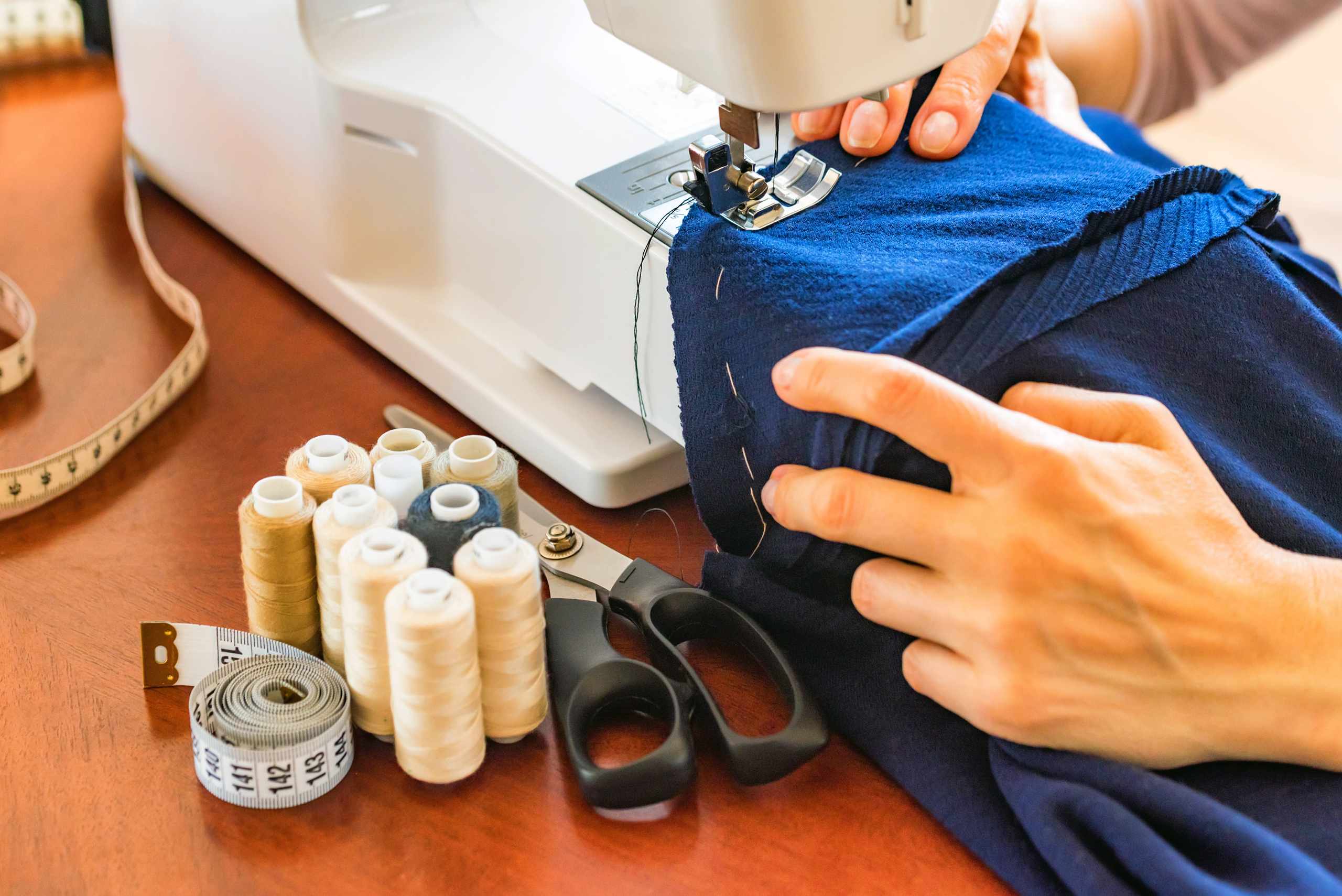
Before you thread the machine or cut the very first seam on your first garment, you should choose fabric that makes the sewing process as easy as possible. The choice of fabric will impact how accurately you cut the pieces, how well fabric layers feed through under the presser foot, how flat a seam will lay once pressed, how easily mistakes will be visible, and whether your pattern pieces seem simple or complex. The garment pattern you are using to sew may have simple pattern lines and construction instructions, but if the fabric you choose slides, drapes, pulls, wrinkles, and has an edge that easily frays or looks messy, then your garment may start to feel more complicated to understand how to sew. It may look complicated before the project even starts.
Woven fabrics with a tight weave are more stable for beginners than something slippery, slippery, stretchy, or very drapey. A simple cotton fabric or cotton blend of a lighter weight or medium weight that is a woven fabric usually will work better and lay out easier on the table. A flat surface is best when you are trying to position all pattern pieces and make sure the pattern pieces are on the straight grain of the fabric and not on the bias or cross grain. A stable woven fabric also helps the edges of a fabric to align with the selvage or side of the fabric, and it makes it easier to mark notches with chalk or another method than a cutting shears or pattern markings that are printed in.
You should test a scrap piece of fabric before cutting the pattern to confirm that the sewing machine sews the fabric well. If the fabric does not shift in the sewing machine, the stitch does not look puckered or stretched, or the fabric does not drag through the needle plate, then you may sew it. If you need to back stitch to secure the stitch, you should be able to stitch a few inches and press the fabric with an iron to see if it lays flat. If it does not wrinkle or stretch and it is not scorched, then this fabric would be a suitable first fabric for sewing. If the fabric does not press with an iron or is stretched or scorch, try a different fabric. If this fabric is not a good first fabric, use another fabric that you are able to cut and sew.
Fabric choice also has something to do with the weight of the fabric you choose to sew. A light weight fabric or a heavy fabric can be more difficult to cut and sew than something in between. A light weight fabric may easily slip around on the table, or the fabric may not lay flat on a flat surface, and any irregularity in a stitch or seam will be more visible. A heavier fabric may cause the seam or corner to be bulky, and a heavy fabric may be difficult to fold over to make the hem edge. A heavier fabric may be more difficult to sew around the waistband or a facing that has to be turned under and pressed. A medium or light weight fabric usually will be easier to fold over, or you will be able to guide the fabric with your hand and keep the fabric from shifting under the presser foot.
Some colors or prints may be difficult to match. A print that has to be matched at a seam may make the garment look more confusing than it needs to look. It may also take some extra time and effort to figure out how to match the fabric pieces. The fabric you choose should make the pattern lines look easier to read if the pattern is not yet easy to read. A smaller print or solid color fabric may work best for your first project. It may also help your practice or project to have a print that is easy to match. Once you have figured out how the pattern needs to be read, you will be able to read a different or larger print fabric more easily.
The best fabric to choose for a first garment is not the prettiest fabric you see. It is the fabric that makes it easier for you to follow each step of the pattern instructions from start to finish, from sizing to measuring the fabric, to lining up a pattern piece, to marking notches and dart points, and to sewing a seam or hem that looks like the pattern piece. Once you can sew the pieces that are marked or drawn on the fabric and can tell which side of the fabric faces in and which faces out to sew the seam, you will understand a bit more about what the instructions tell you to do. A pretty fabric can be used in a garment at the same time it makes sense for you, and if the instructions say so, you will sew a different fabric to fit it in better.
You should ask these questions before you purchase any fabric to sew, or before you start cutting pieces out of any fabric that is on hand. Will the fabric stay flat in the cut? Will the grain of the fabric look the same all around the fabric? Will there be enough contrast between a chalk mark and the fabric so that it can be seen to mark notches and darts on? Can the fabric press with an iron without it wrinkling, scorching, or stretching? Can the sewing machine sew the fabric and it will produce a good looking seam if the needle is standard and it has an appropriate thread thickness? You do not need a perfect fabric to learn how to sew a garment, but you should choose a fabric that is easier to cut and sew than something that makes the entire project more difficult or impossible to do in the beginning.